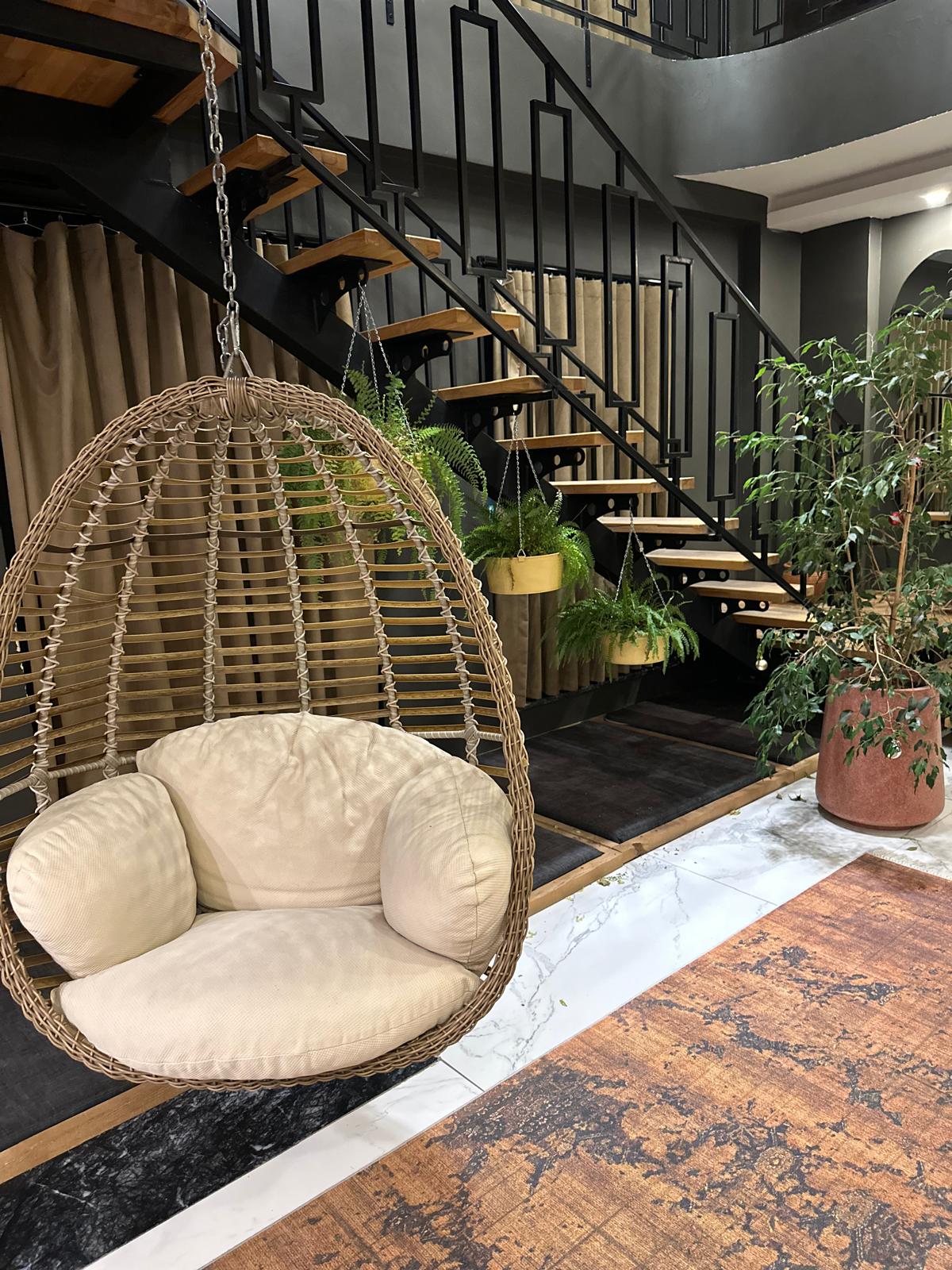
Work does not always end when the laptop closes.
The body may leave the task, but the nervous system often remains active. Thoughts continue cycling. Muscles stay slightly tense. The pace of the day lingers into the evening.
Decompression is not automatic. It is a transition that requires support.
Why the Body Does Not Instantly Relax
During work hours, the nervous system operates in response mode. Even in calm environments, attention is outward. Decisions are made. Messages are processed. Micro-pressures accumulate.
When the workday ends, the body does not immediately recalibrate. Without a clear threshold, stimulation carries forward.
This transition dynamic connects directly to what is explored in Why Emotional Transitions Define the Way We Experience Home, where movement between states shapes emotional stability. If the shift from work to rest is abrupt or unsupported, tension remains partially active.
Decompression is not laziness. It is regulation.
The Role of Ritual in Releasing Work Energy
A consistent post-work ritual signals closure.
It does not need to be elaborate. Changing into softer clothing. Washing hands slowly. Sitting in the same chair for five quiet minutes. These gestures create containment.
As discussed in The Psychology of Home Rituals and Emotional Regulation, repetition with intention trains the nervous system to associate specific actions with specific states. Over time, the body begins to anticipate relaxation when the ritual begins.
Without ritual, work energy disperses into the entire home. With ritual, it dissolves at the threshold.
The key is consistency rather than intensity.
Sensory Cues That Support Decompression
Atmosphere plays a decisive role in decompression.
Harsh overhead lighting maintains alertness. Bright screens prolong stimulation. In contrast, softer light lowers intensity. Muted textures reduce visual demand. A familiar evening fragrance accelerates the shift toward rest.
This sensory continuity echoes what is explored in How Fragrance Shapes Emotional Memory and Atmosphere at Home, where repeated scent cues build emotional recognition. When a specific fragrance is introduced consistently after work, it becomes associated with closure.
Different energy tendencies decompress differently.
Earth-oriented personalities may prefer structured routines that create stability.
Water-oriented energies benefit from soft, enveloping atmospheres.
Air-oriented types often regulate best when visual clutter is reduced and breathing space increases.
Decompression is not about distraction. It is about slowing internal momentum.
At EVA HOME WORLD, home is viewed as a space that absorbs and neutralizes external pace not by force, but through coherence.
Decompression is not a luxury.
It is the bridge between effort and rest.
When the transition from work to home is supported by ritual and atmosphere, emotional regulation becomes fluid rather than delayed.
Calm does not arrive automatically.
It is invited gently, repeatedly, every evening.
Related Reading
* Why Emotional Transitions Define the Way We Experience Home
* The Psychology of Home Rituals and Emotional Regulation
* How Fragrance Shapes Emotional Memory and Atmosphere at Home


Yorum yazın
Bu site hCaptcha ile korunuyor. Ayrıca bu site için hCaptcha Gizlilik Politikası ve Hizmet Şartları geçerlidir.