
We often think of home as a place.
In reality, it is a series of transitions.
The moment we step inside after a long day. The pause before sleep. The shift from work to rest, from conversation to silence. These in-between moments shape how home feels far more than the objects inside it.
Emotional stability is not built in constant states. It is built in transitions in how smoothly we move from one state to another.
The Psychology of Arrival
Arrival is not physical alone.
The body may enter a room, but the nervous system often lingers elsewhere.
This is why the first moments inside a home matter. If lighting is abrupt, surfaces sharp, or atmosphere inconsistent, the body remains alert. But when sensory cues are steady, transition becomes easier.
As explored in How Homes Quiet the Nervous System Without Words, coherence reduces vigilance. Emotional transition depends on that quieting.
Arrival also relies on familiarity. Predictable cues a recurring scent, a soft light switched on at dusk signal that the outside state can dissolve. Without these cues, emotional residue follows us deeper into the evening.
Transitions, when unsupported, blur. Supported transitions regulate.
Thresholds and Emotional Containment
Every home contains invisible thresholds.
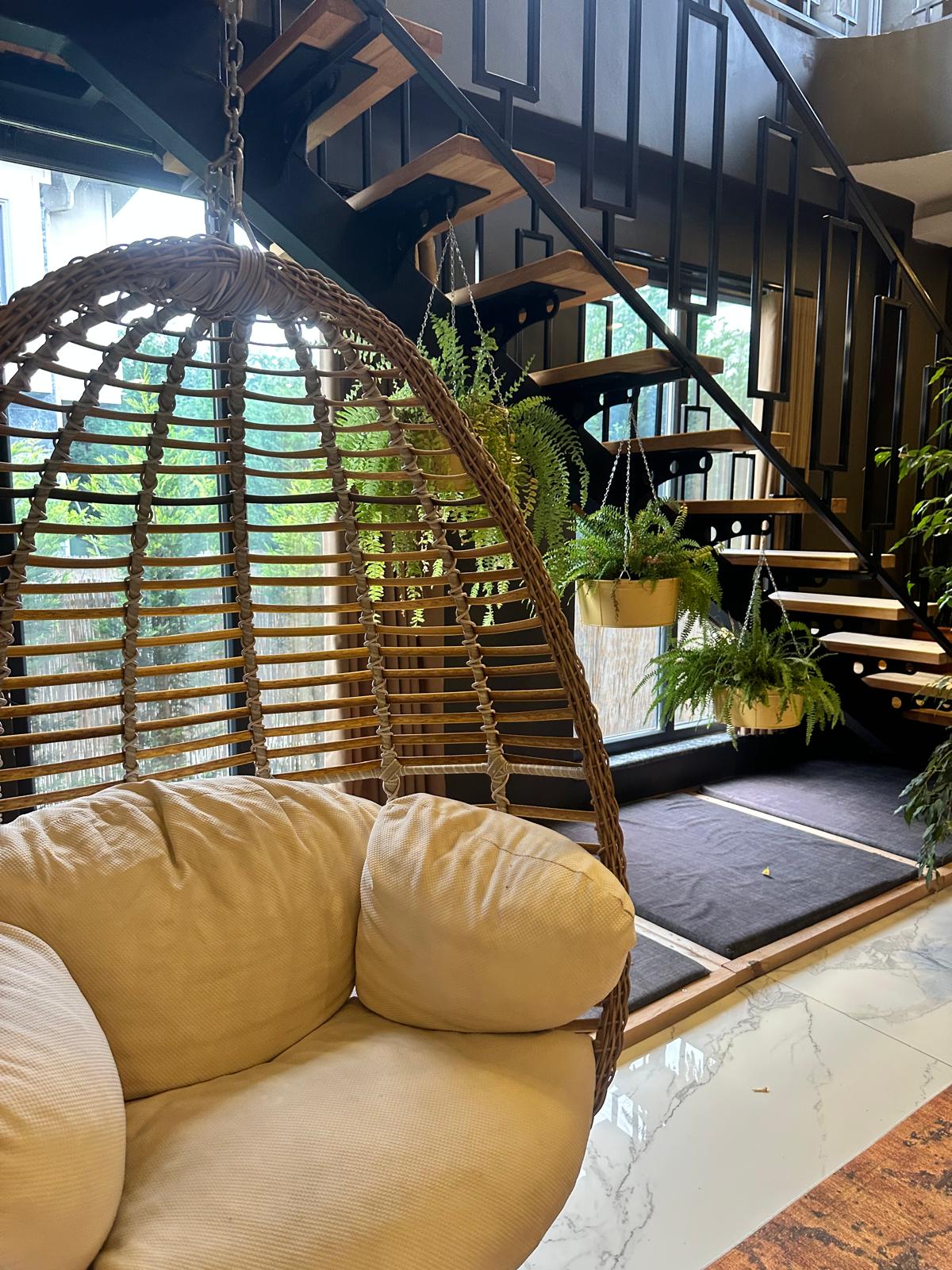
Doorways. Corners. Ritualized spaces. Even a chair used consistently for reflection becomes a psychological boundary.
Thresholds create containment. They mark where one emotional state ends and another begins. This principle is closely connected to what is discussed in The Psychology of Home Rituals and Emotional Regulation, where repeated gestures build emotional architecture.
Without threshold markers, days bleed into one another. Work energy lingers into rest. Stimulation carries into sleep. Small transitional rituals prevent that overflow.
This is not about dramatic change. It is about gentle demarcation.
Water-oriented energies often feel these thresholds strongly, needing atmosphere to signal emotional closure. Earth-oriented personalities benefit from structured transitions that reinforce stability. Air-oriented types regulate best when transitions are clear but not rigid.
Emotional containment is rarely visible. It is experienced.
Decompression and the Pace of Calm
Decompression is a slow process. It requires pacing.
Fragrance, lighting, and repetition work together to slow internal momentum. In How Fragrance Helps the Mind Transition Between Moments, scent acts as a bridge between states. When paired with ritual, it accelerates emotional shift without force.
Homes that support decompression are not passive. They are intentionally coherent. The pace of light softens toward evening. Textures absorb sound. Objects remain stable rather than shifting constantly.
Decompression fails when environments are inconsistent. Sudden brightness, clutter, or abrupt change reactivates vigilance.
Emotional transitions define the experience of home because they determine whether calm is sustainable.
At EVA HOME WORLD, home is understood not as a static environment but as a rhythm. Its power lies in how it guides movement between states.
Home is not a single feeling.
It is the space between feelings.
When transitions are supported through ritual, atmosphere, and sensory continuity emotional regulation becomes fluid rather than forced.
Calm is not created in stillness alone.
It is shaped in the moments that lead to it.
Related Reading
* How Homes Quiet the Nervous System Without Words
* The Psychology of Home Rituals and Emotional Regulation
* How Fragrance Helps the Mind Transition Between Moments


Yorum yazın
Bu site hCaptcha ile korunuyor. Ayrıca bu site için hCaptcha Gizlilik Politikası ve Hizmet Şartları geçerlidir.